


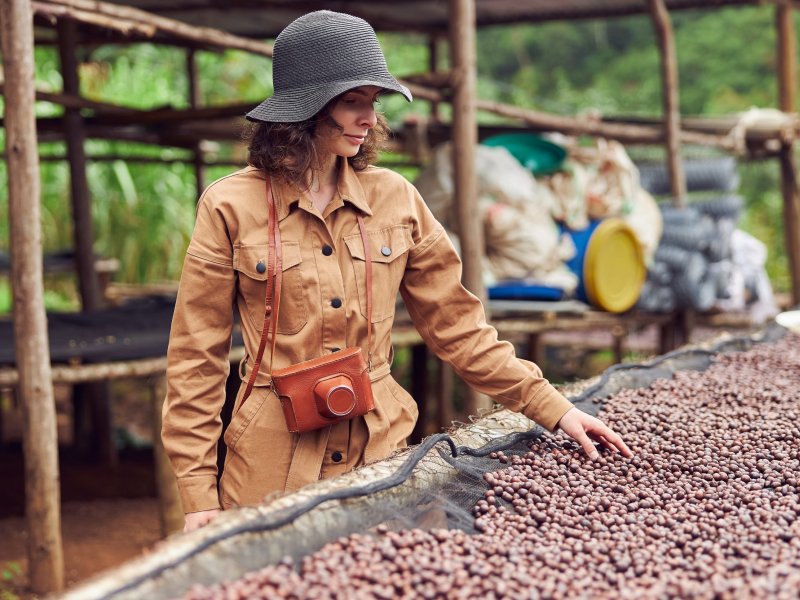
Naturally processed coffee: how does it work?
Naturally processed coffee, also known as “natural” or “dry process,” is one of the oldest and most traditional methods of coffee processing. This process began before there was technology to remove the pulp from the beans. Although it has been refined over time, the essence remains the same: drying the whole coffee beans, with the pulp, in the sun. This affects the final taste and quality of the coffee, resulting in rich and distinctive flavor profiles.
How the natural coffee process Works
The natural process begins immediately after the ripe coffee berries are harvested from the tree. Unlike other methods, such as the washed (or wet) method, where the pulp and mucus are removed before drying, in the natural process, the coffee fruit is left intact. This means that the bean remains wrapped in the pulp and mucus during drying. The big difference with this method is the way in which the sugar and compounds in the pulp interact with the coffee beans during drying. After harvesting, the coffee berries are spread out on large terraces (open areas for drying) or on raised beds, where they are exposed to the sun. During the process, the berries are turned frequently to ensure uniform drying and to prevent unwanted fermentation. This drying stage can last from 15 to 30 days, depending on weather conditions, such as humidity and sunlight. The slower and more uniform the process, the better the quality of the resulting coffee. If the fruit dries too quickly, the bean may not absorb the necessary compounds from the pulp, resulting in a coffee with a flat or unbalanced flavor. On the other hand, if drying is too slow or occurs in a humid environment, the risk of over-fermentation increases, which can ruin the batch. The balance between heat, light and ventilation is essential for the success of this method.
Natural process in progress
The natural process is a practice that requires a lot of patience and control on the part of the producers. Every day, the coffee needs to be monitored, turned over and protected from sudden rain or excess moisture. During the process, the pulp slowly dehydrates, transferring its sugars and chemical components to the grain. This phenomenon is what gives natural coffee its unique sensory characteristics. In regions where the climate is drier and more stable, such as in some parts of Brazil and Ethiopia, the natural process can be carried out more safely. The strong sun and dry winds in these areas create the ideal conditions for drying the fruits. An important aspect to be considered is that, during the drying process, the beans continue to "breathe", that is, absorb and release volatile compounds. The way in which these compounds interact with the natural sugars of the fruit is what makes natural coffee so special. After the drying process, the beans need to rest for a period of time before undergoing the process of removing the dry husk.
The impact of natural processes on coffee flavor
Compared to the washed process, which generally results in cleaner, more acidic coffees, the natural process stands out for its denser body and sweeter, fruitier flavors. The presence of pulp during drying adds more sugars to the bean, creating a natural sweetness that does not need to be masked with additional sugar in the cup. Naturally processed coffees typically have an earthier flavor, sometimes with hints of dark chocolate or almonds. However, what really sets these coffees apart are the fruity flavors. On the other hand, the natural process can be tricky. If not done correctly, the coffee can have flavor defects, such as fermentation or excessive bitterness. Therefore, it is important to carefully control the drying environment so that the sugars and acids in the pulp mix well with the beans.
The Growth of Natural Coffee in the Specialty Coffee Market
In recent years, natural-process coffee has become popular among specialty coffee lovers because it offers more complex and interesting flavors. This type of coffee stands out in barista competitions and tasting events, helping to increase its acceptance in the market. In addition, the natural method is considered more sustainable in regions with water scarcity, such as parts of Africa and northeastern Brazil, because it requires less of this resource compared to the washed process. However, large-scale production of high-quality natural coffees is limited due to the complexity and time required for the process. This makes these coffees generally more expensive. For many consumers, the cost is justified by the experience they provide. By understanding how this process affects flavor, consumers can better enjoy this beverage, which goes beyond a simple cup of coffee. If you are looking for a different sensory experience, it is worth exploring natural-process coffees and discovering their unique flavors.